
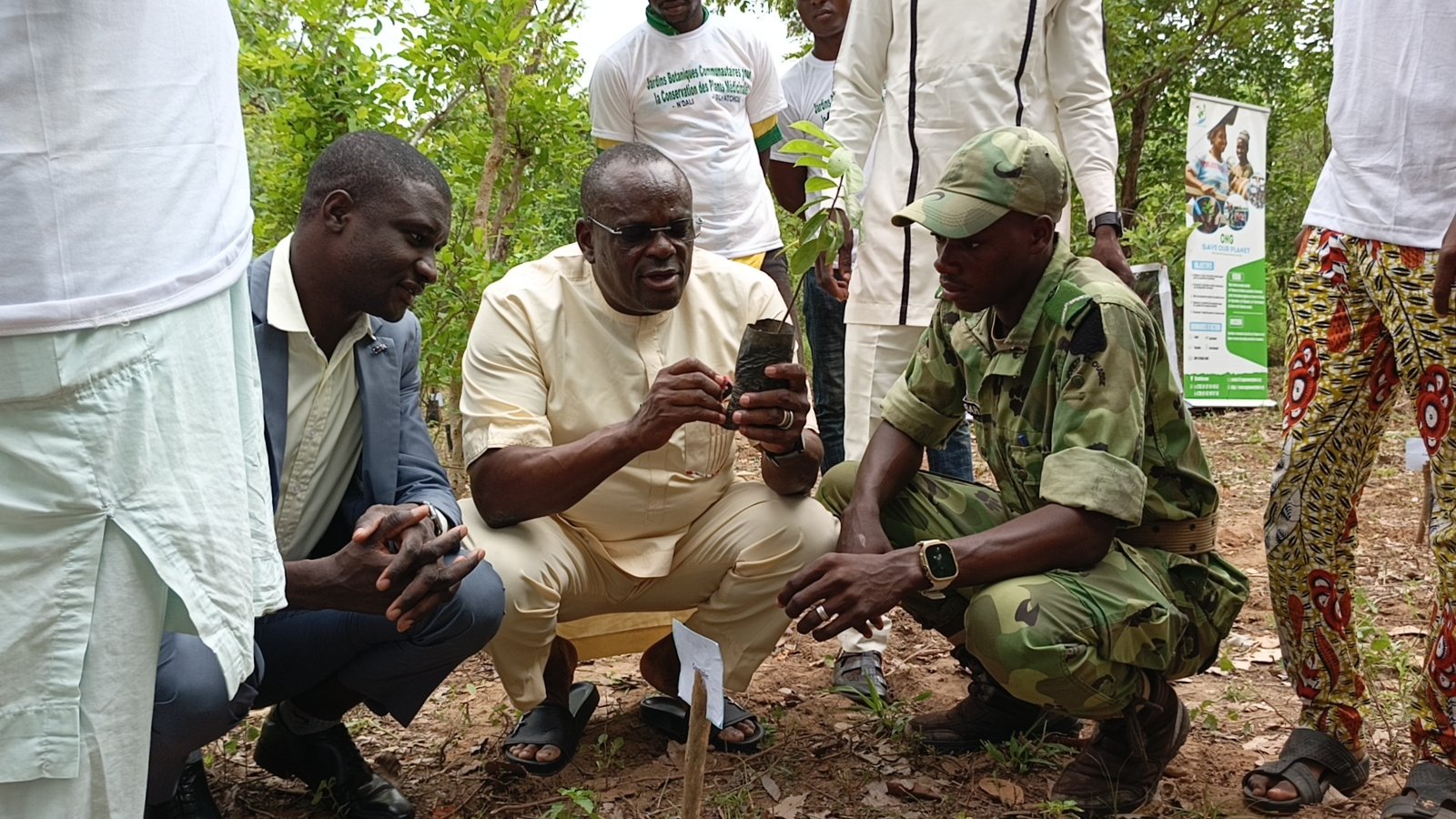
On June 3 and 4, 2026, the NGO Save Our Planet successfully delivered on its commitment. Following training sessions, the communities of N’Dali and Tchatchou hosted the first planting of community gardens dedicated to the conservation of medicinal species. Traditional healers, local authorities, technical services, and community members joined forces to ensure this living heritage does not disappear.
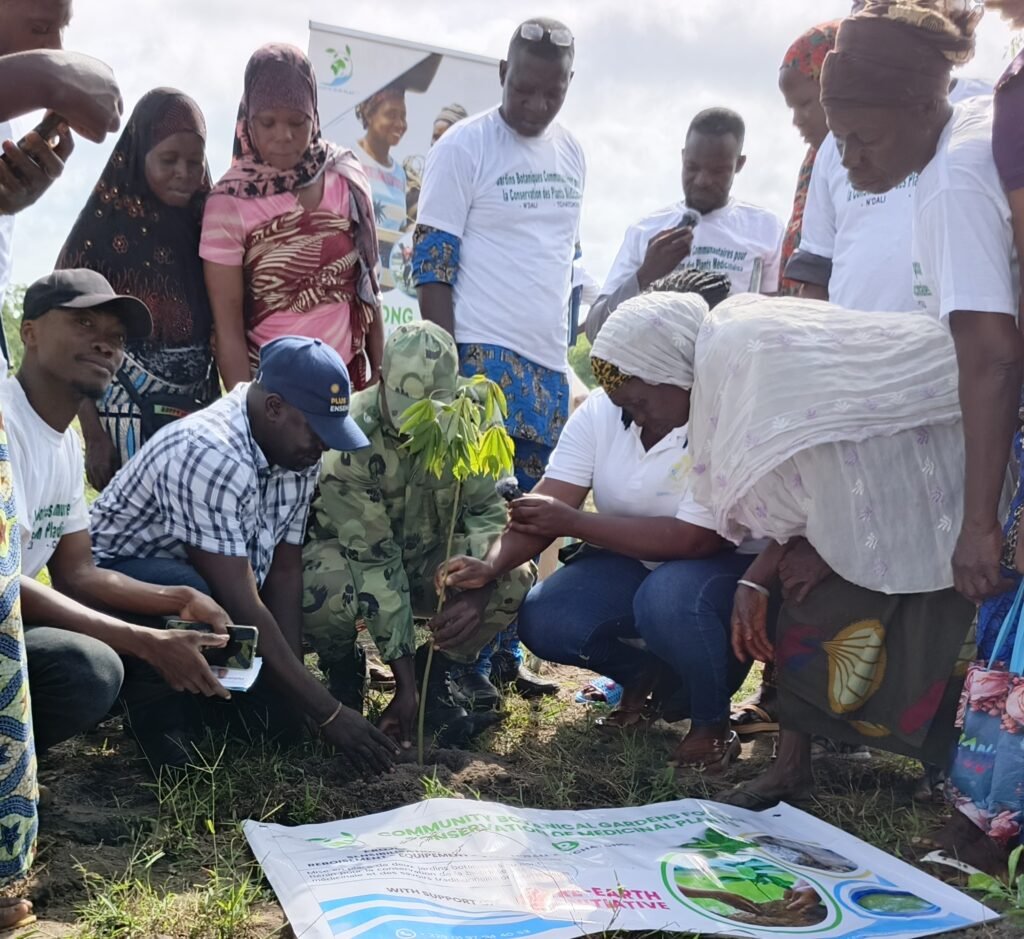
As part of the JARCOMED Project (Community Gardens for the Conservation of Medicinal Plants), funded by the Re-Earth Initiative, reforestation operations were officially carried out in the municipalities of N’Dali and Tchatchou in northern Benin. What was put into the ground was not merely trees and shrubs, but the hope that ancestral knowledge will endure in the face of the growing scarcity of medicinal species.
This milestone followed weeks of training in agroecology. The goal was clear: to create living biodiversity reservoirs, managed by and for the communities. Before the planting began, the Executive Director of Save Our Planet, Mr. Megan Valère Sossou, outlined the roadmap wherever the NGO operates.

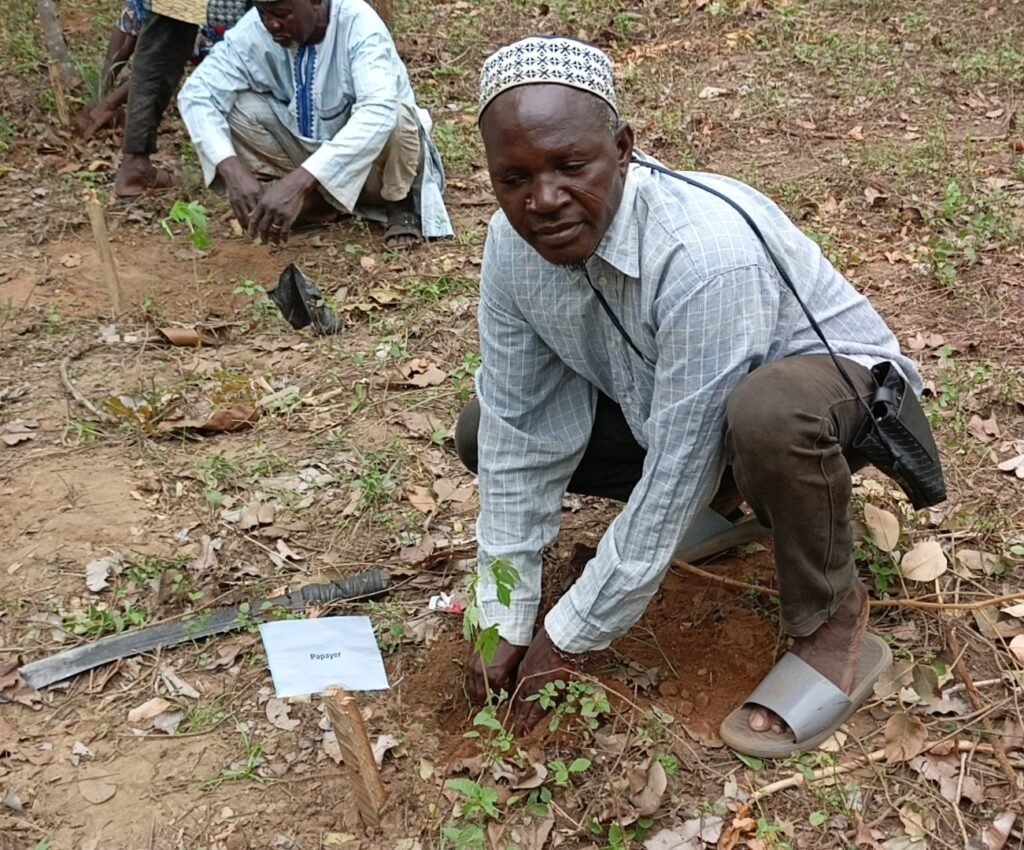
In both N’Dali and Tchatchou, he announced that hundreds of medicinal plants from thirty different species had been mobilized, while emphasizing: « This list is not exhaustive. In the future, communities may enrich it with additional medicinal species they find useful. » This approach grounds the project in reality, rather than in imposed frameworks. Each plot reserved for different species was carefully labeled with its name to facilitate identification and monitoring by everyone, from traditional healers to village children.
Support from Benin’s Water, Forests, and Hunting Authorities
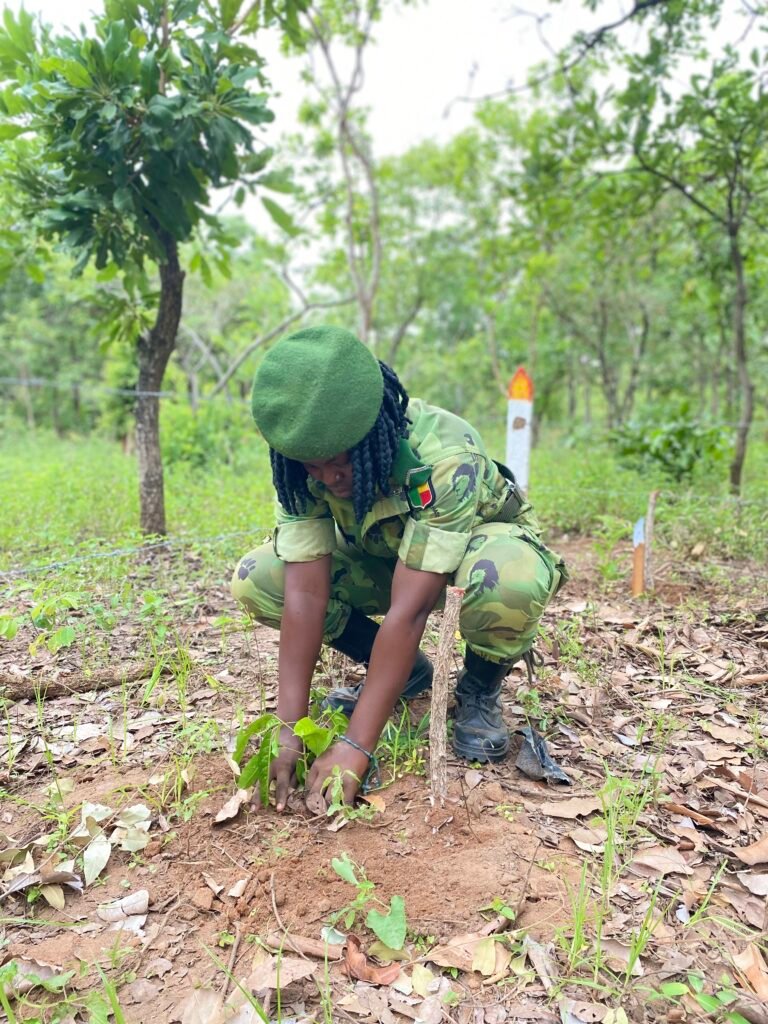
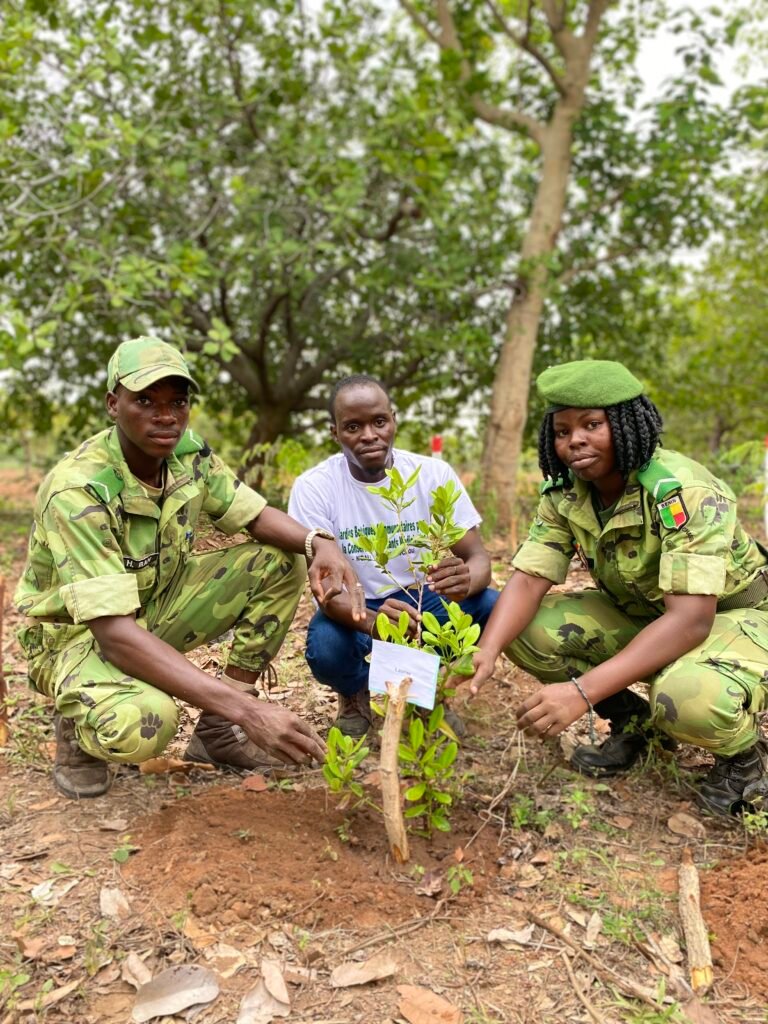
Officers from the Water, Forests, and Hunting authorities, present in both communities, did not limit themselves to speeches. In the field, they demonstrated how to plant a young seedling so that it withstands the early dry season droughts.
In N’Dali, Mr. Bah Hilaire made a compelling pragmatic argument: « Medicinal plants are not merely a cultural heritage. They contribute to community health. Valuing them also reduces expenses related to purchasing pharmaceutical drugs. » He then rolled up his sleeves and provided a hands-on demonstration of proper planting techniques.
In Tchatchou, Mr. Jérémie Hounkpato took over, with the same technical rigor: precise gestures, advice on planting depth, initial watering, and root collar protection – technical expertise serving tradition.
Local Authorities: Pride, Alarm, and Promises
Among elected officials, enthusiasm was palpable, as was clear-eyed awareness.
In N’Dali, the mayor, Mr. Daouda Saka Mere, arrived with his delegation (Executive Secretary, Communications Officer, Second Deputy Mayor). He saw JARCOMED as much more than an environmental project. After visiting the site and discovering species such as moringa, baobab, iroko, African basil, jatropha, kapok, and laurel, he declared: « This is a bulwark against the disappearance of entire species. I issue a solemn appeal: maintain these gardens as the common good they are. » He even proposed expanding the initiative: « Large spaces remain available and could be developed in the future. »
In Tchatchou, the district chief, Mr. Salifou Orou Goura, said he was « honored » to host the project. His speech reflected an elected official who sees in this garden an opportunity for his community: « I am filled with joy and pride. An organization is finally taking an interest in the development of our locality. »
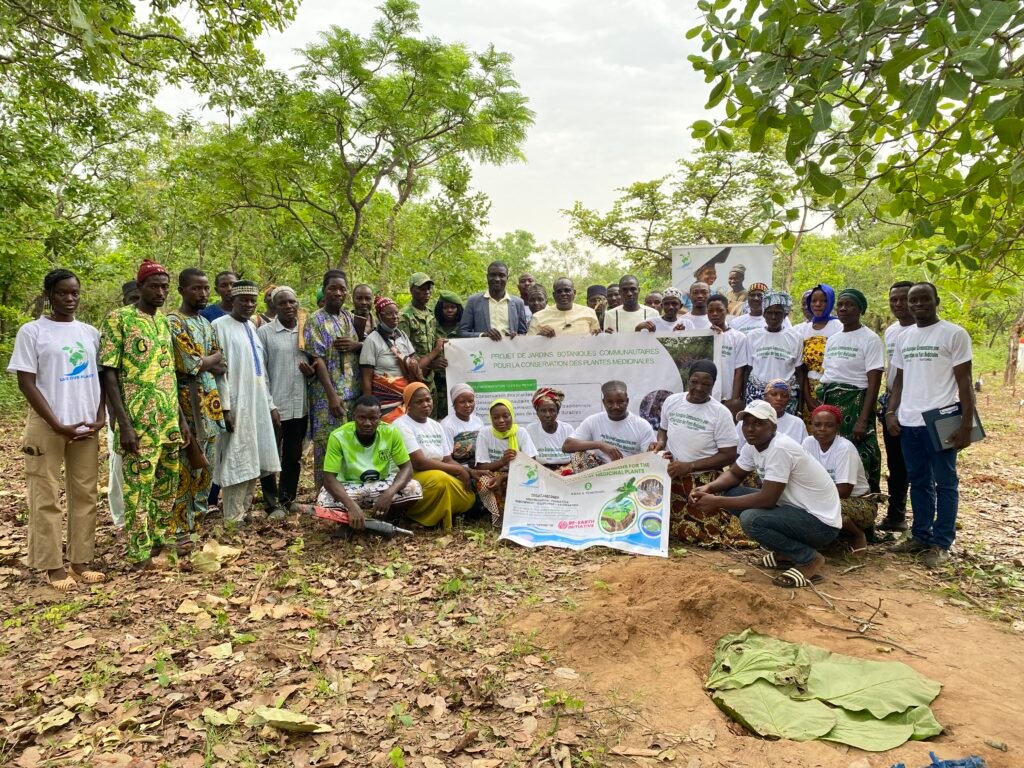
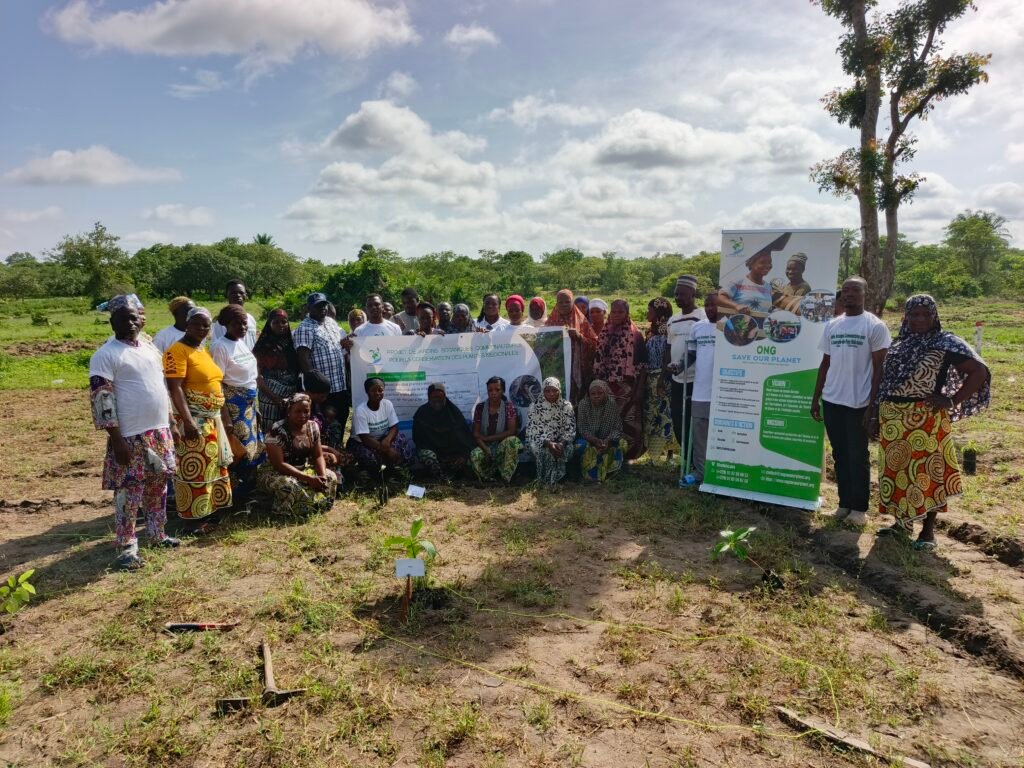
However, he also sounded the alarm about a very real threat: stray grazing animals. The Executive Director himself had noted, during the initial assessment, the presence of cattle in the immediate vicinity of the garden. « This site must be effectively protected, » he had insisted. In response to the herds seeking shade and water, Mr. Orou Goura solemnly promised: « I will support the securing of the garden by every available means. » He then urged his constituents: « Be fully aware of your responsibility in protecting this site. »
The President of Save Our Planet, Mrs. Aïchatou Balla, took the floor to articulate the vision. Her message resonated powerfully in both communities.
In Tchatchou, she said with emotion: « Seeing this mobilization fills me with joy. I want this garden to eventually become a genuine source of medicinal plants and traditional herbal teas for the benefit of local communities. » She expressed the wish: « May these gardens become living places of transmission. Where grandmothers show their granddaughters which leaf soothes a fever and which bark treats a stomach ache. »
She acknowledged the support of the Water, Forests, and Hunting authorities and local leaders, calling it « the keystone for the project’s success. »
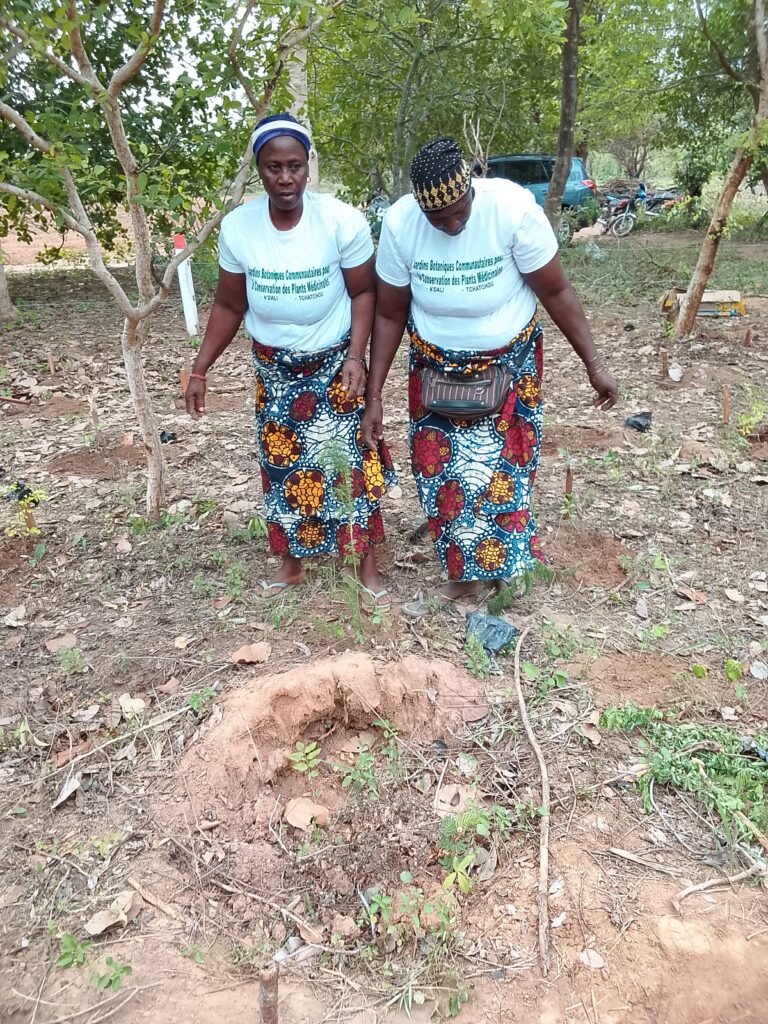
The Solemn Commitment of Traditional Healers
In N’Dali, Mr. Sego Sounon Soumanou, president of the local traditional healers, praised the initiative and the support from the Re-Earth Initiative.
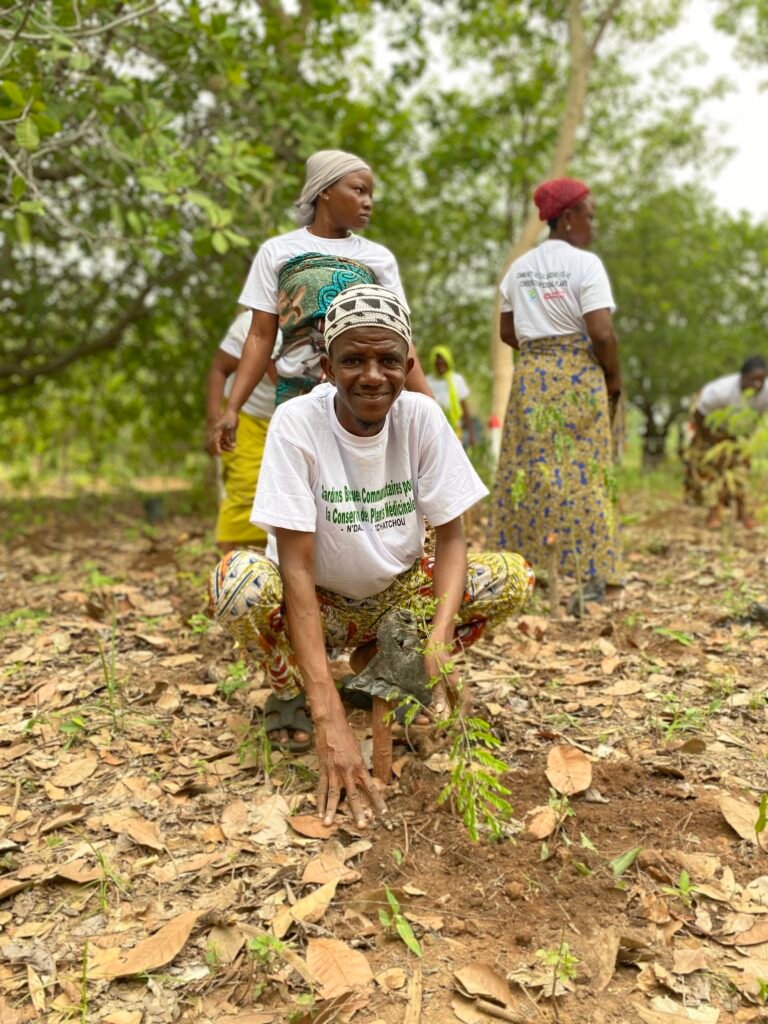
In Tchatchou, the President of the Traditional Healers spoke with simple but powerful words: « Thank you to Save Our Planet. Thank you to the partners. » He then reaffirmed his profession’s commitment: « We, the traditional healers, will maintain the garden and actively contribute to its preservation. »
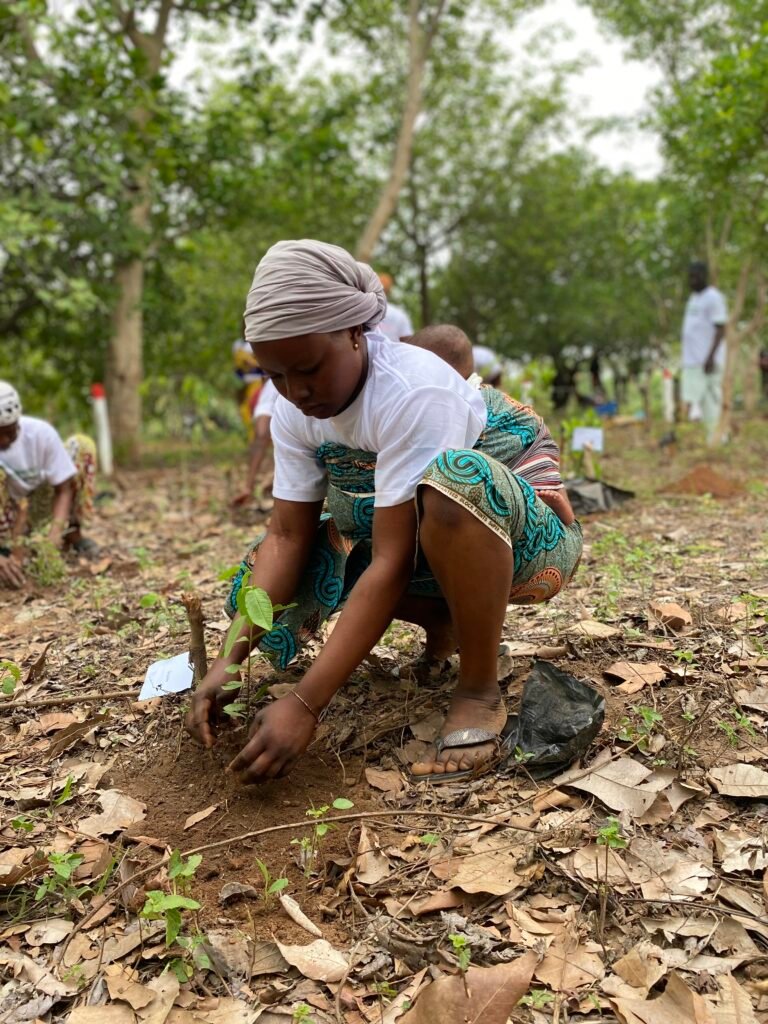
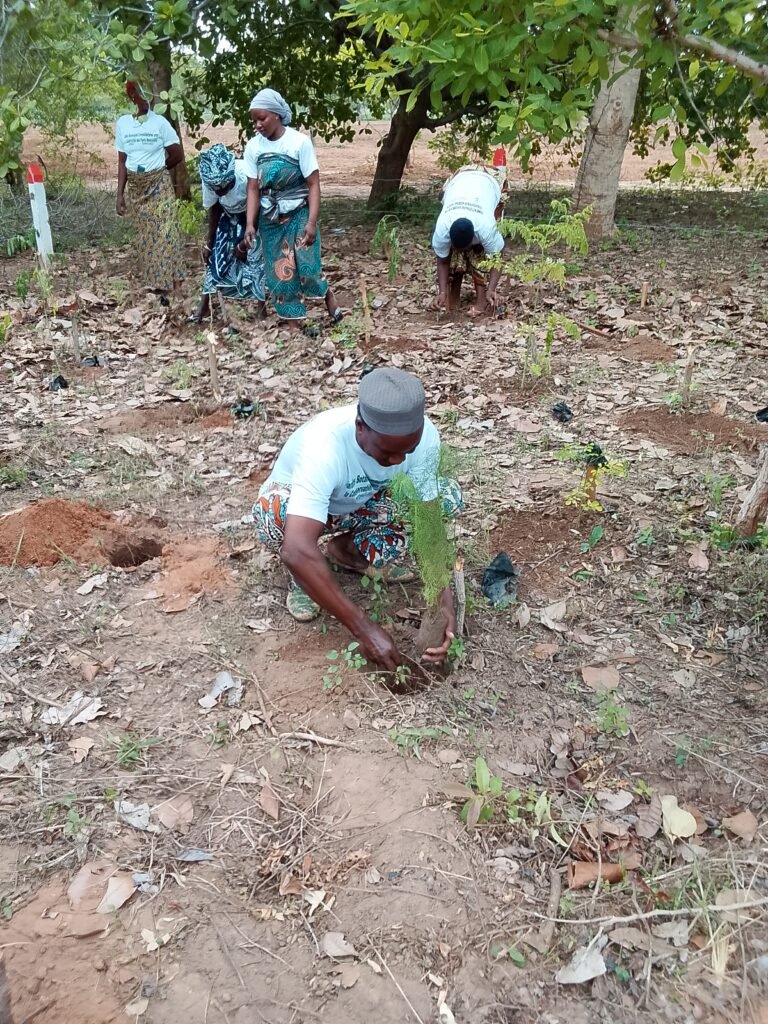
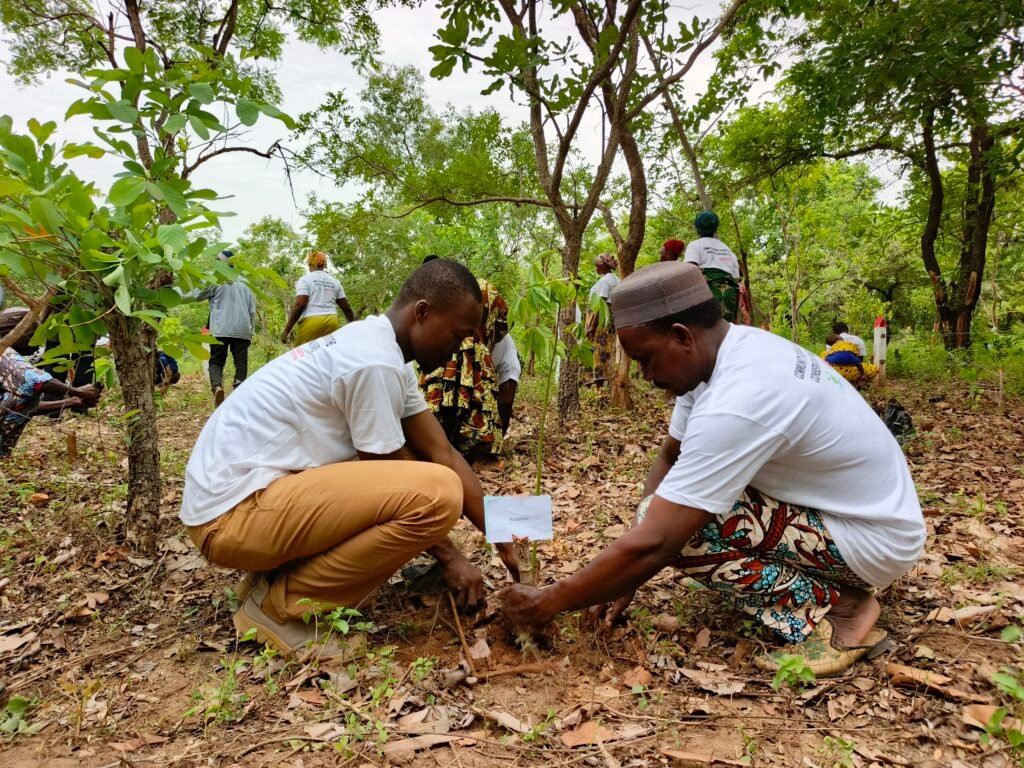
This commitment translated into the active participation of several stakeholders – including healers (both men and women), female farmers, and hunters – in planting activities and governance.
Then came the solemn moment: the planting.
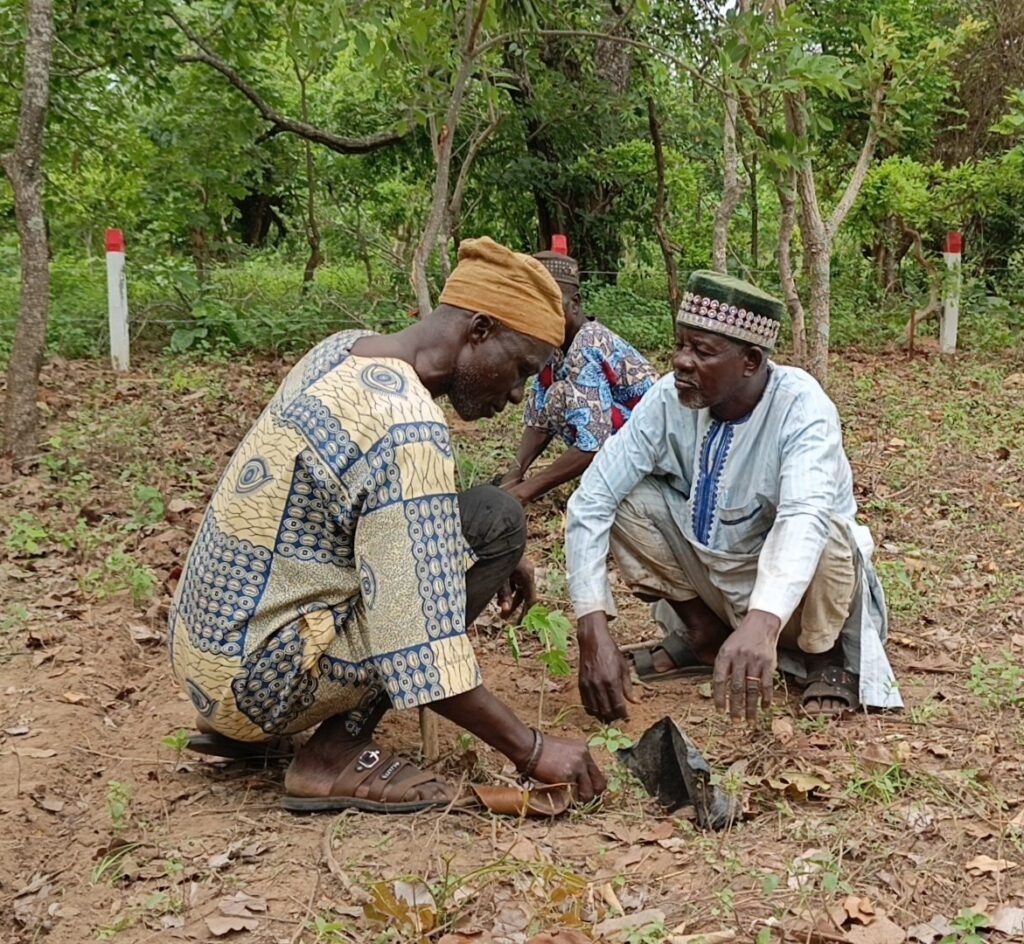
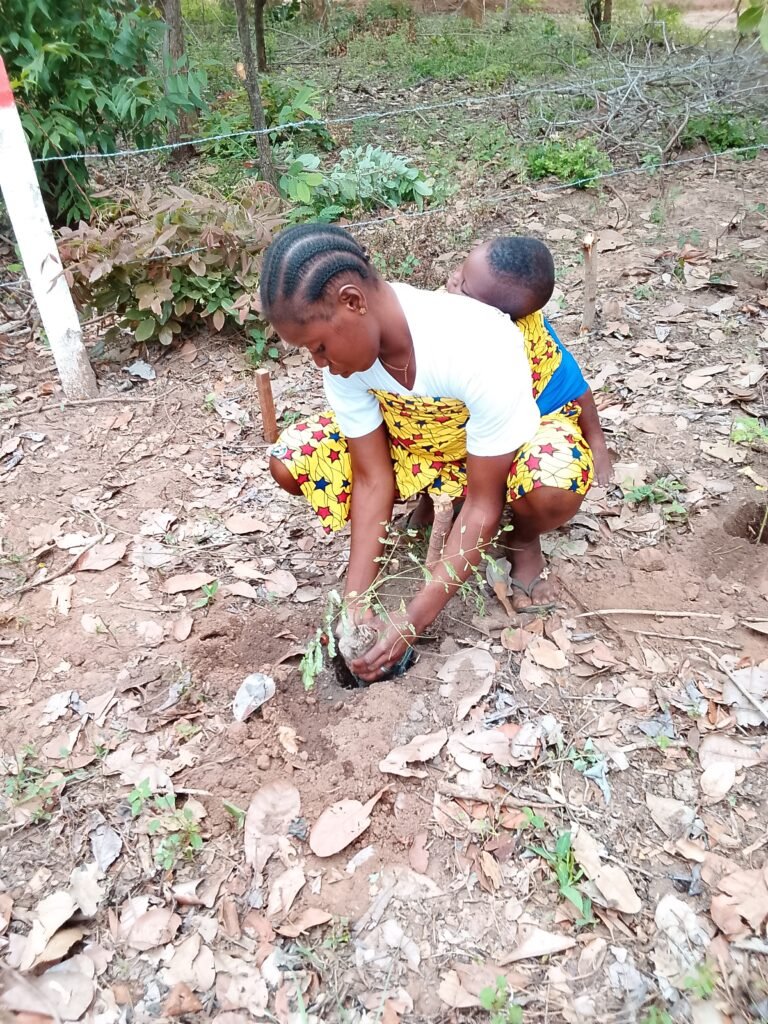
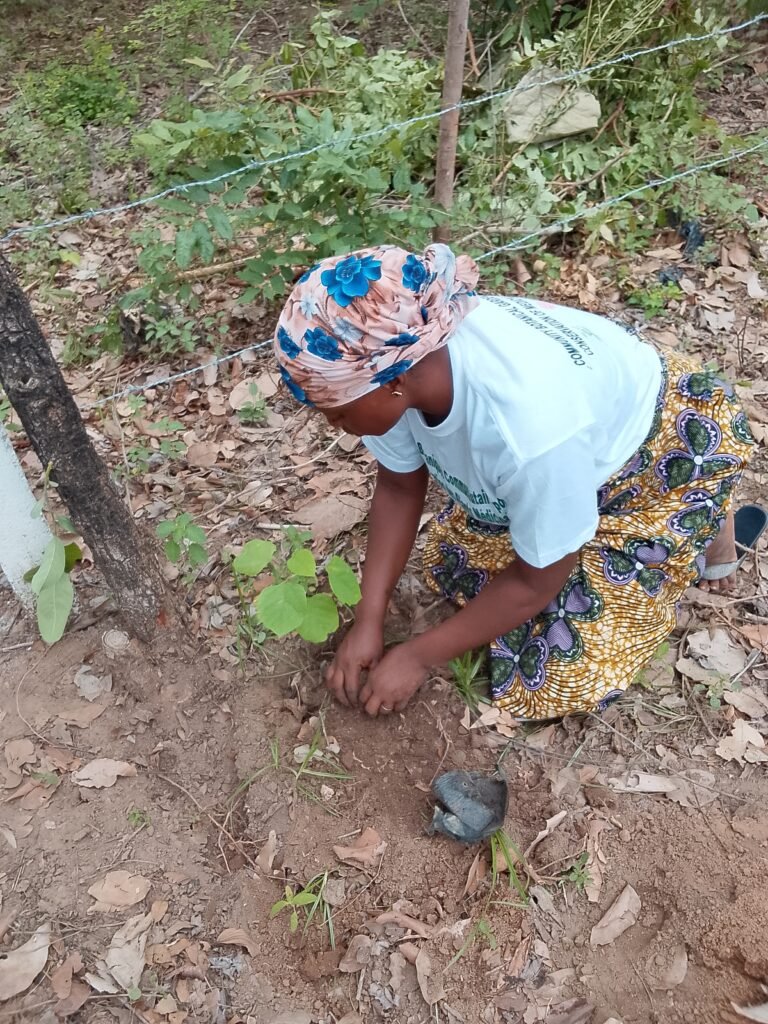
In N’Dali, the Mayor, the Second Deputy Mayor, and the Executive Secretary performed the first plantings, officially launching the reforestation of medicinal plants under the JARCOMED project. It was a powerful symbol. They were followed by representatives of technical services, traditional healers, farmers, young hunters, and the project team.
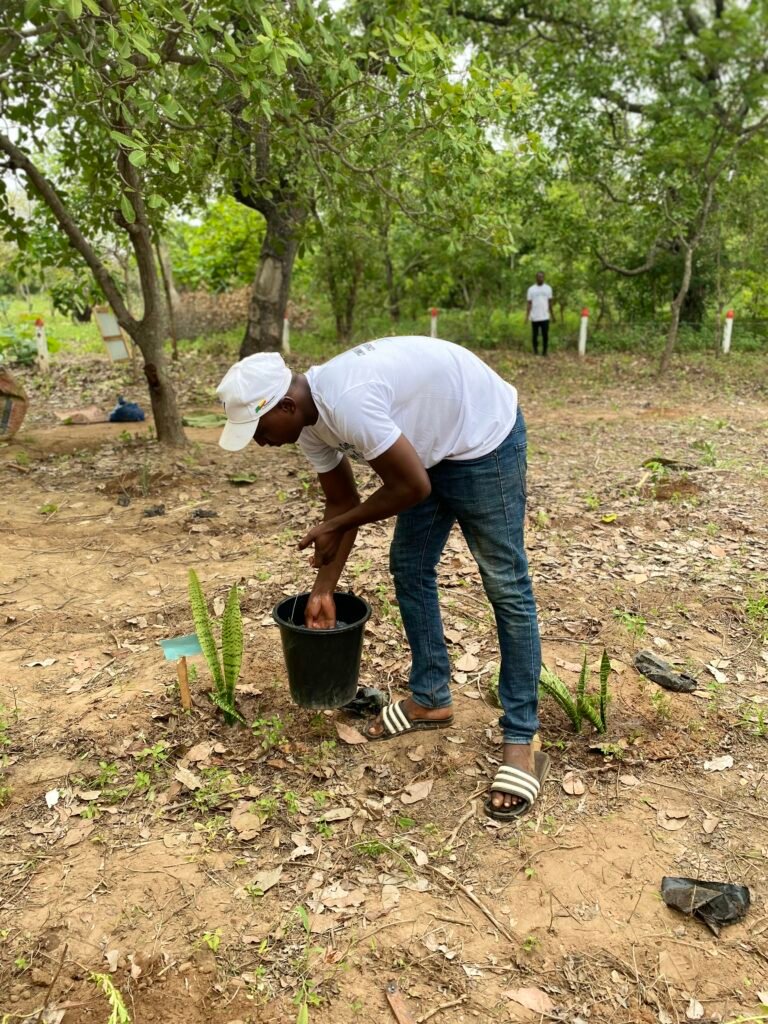
In Tchatchou, the same ceremony unfolded: the District Chief and the representative of the Water, Forests, and Hunting authorities kicked off the planting, immediately followed by the crowd. Each seedling was carefully watered, as if to promise it a long life.
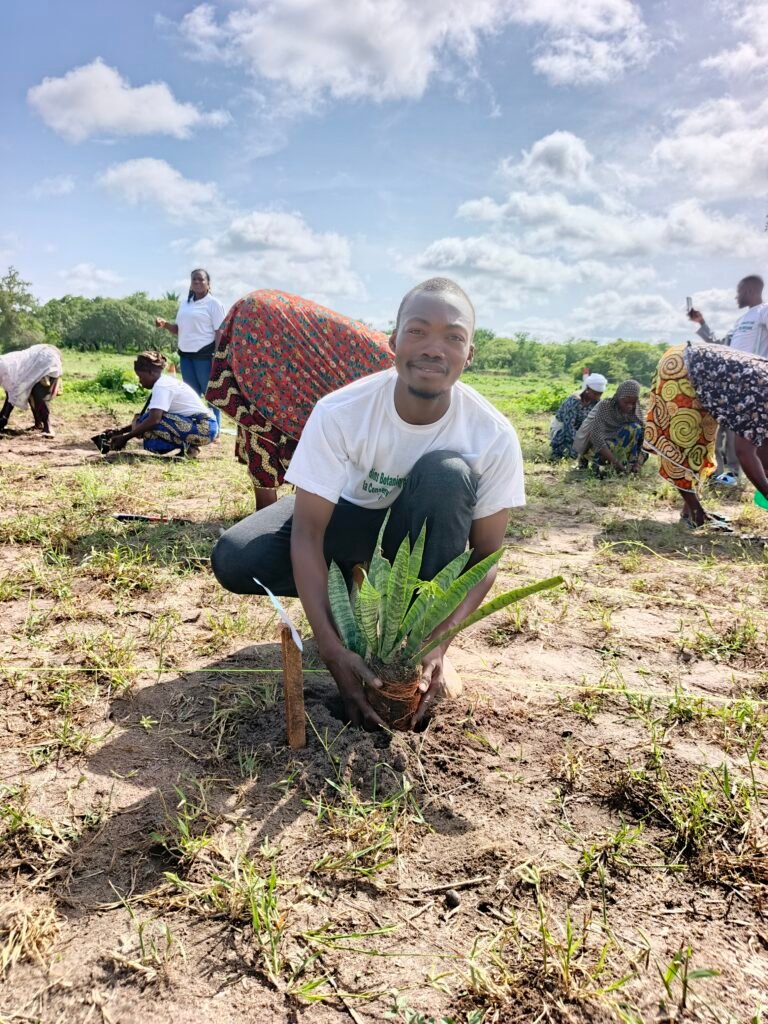
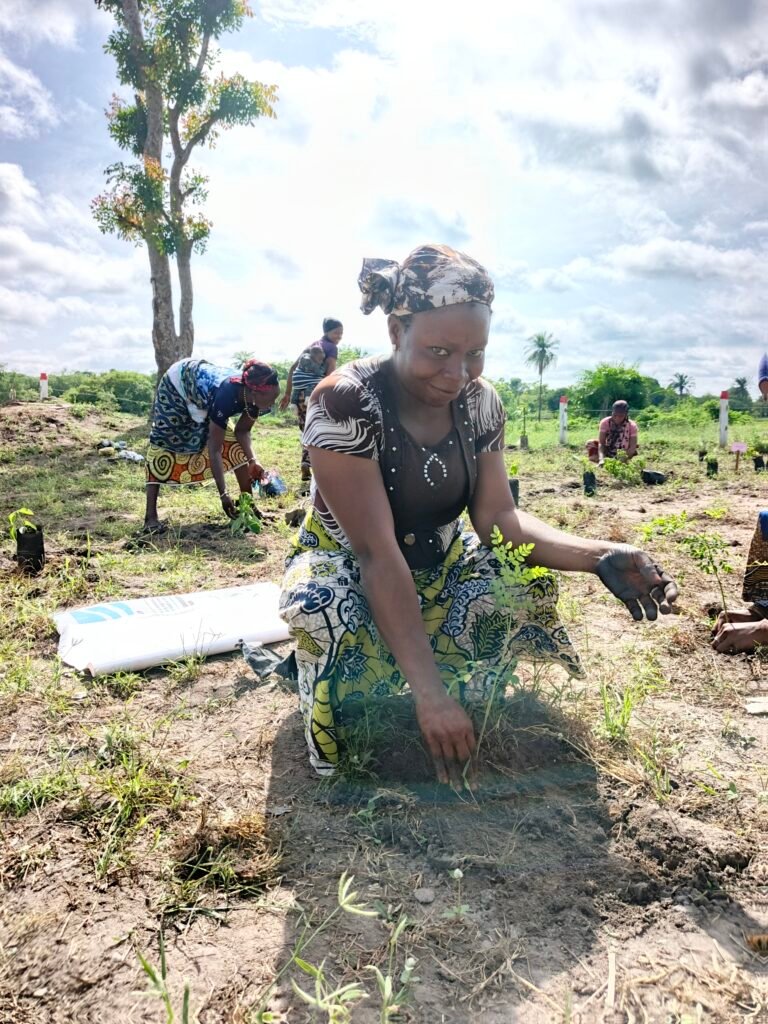
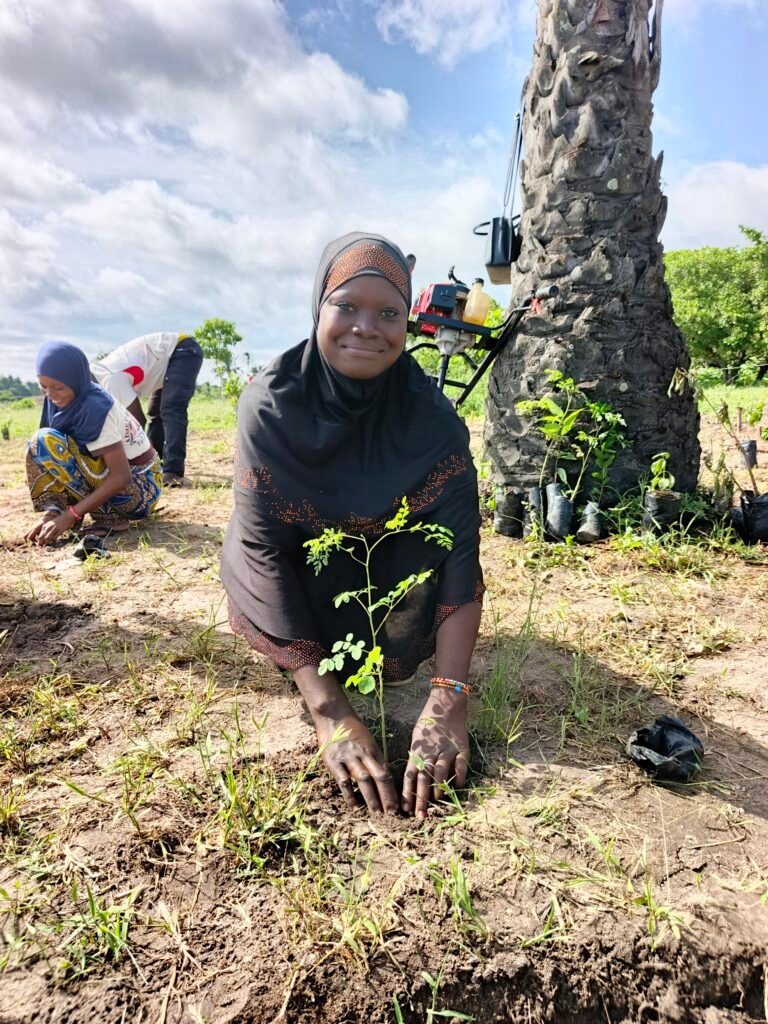
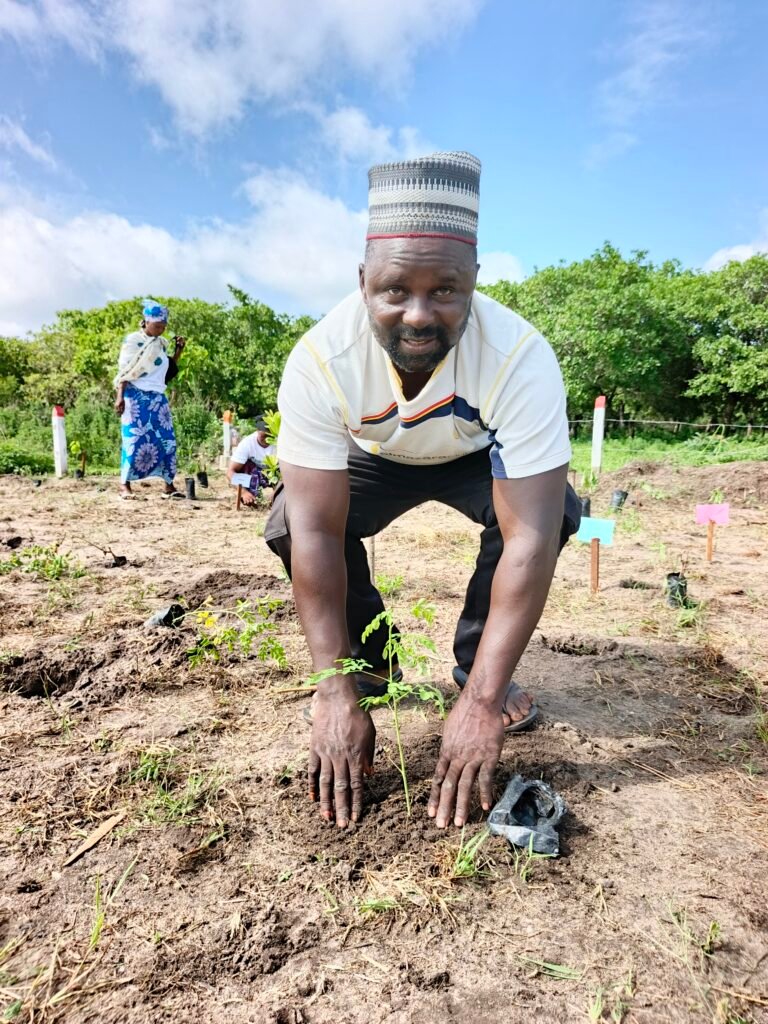
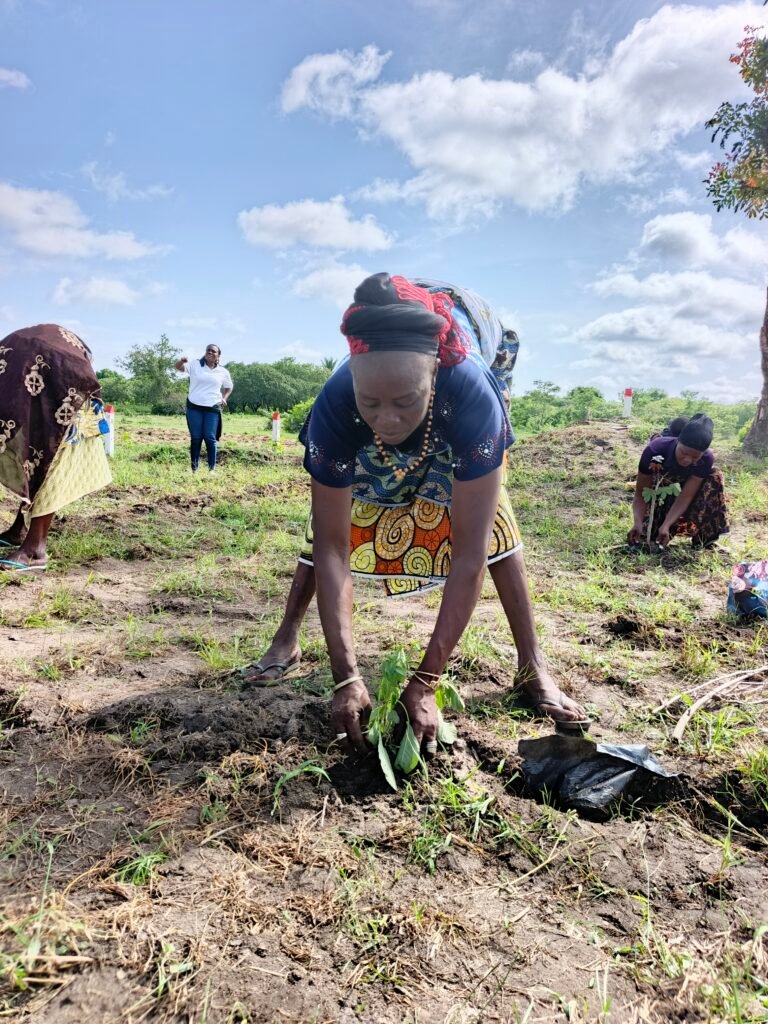
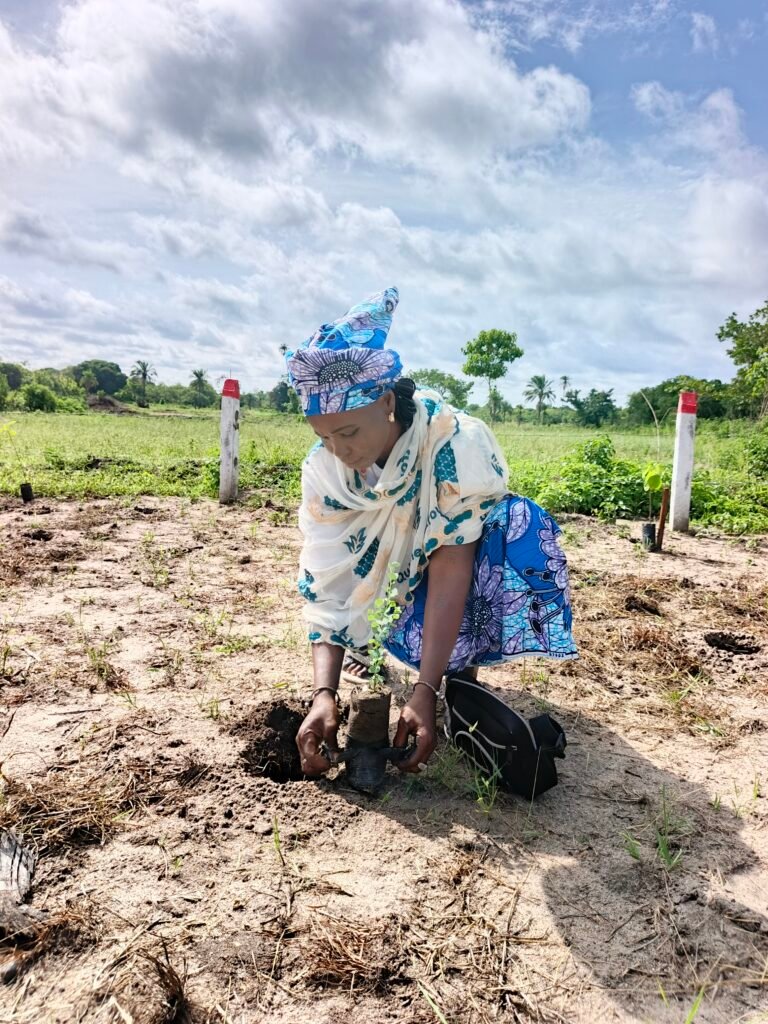
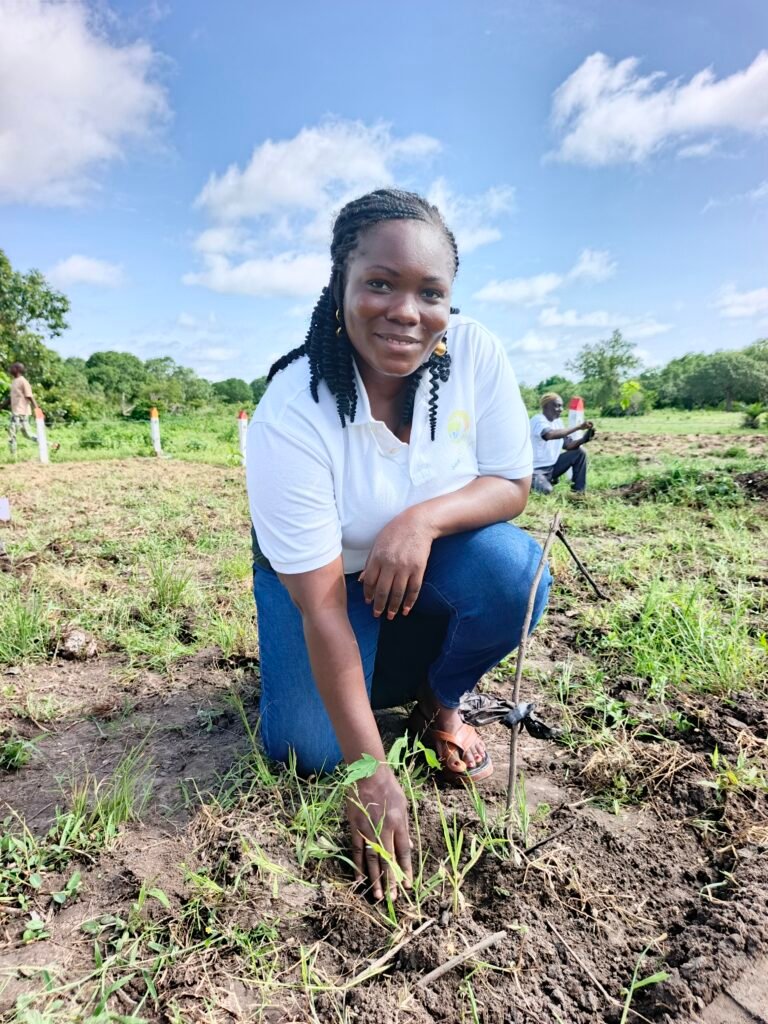
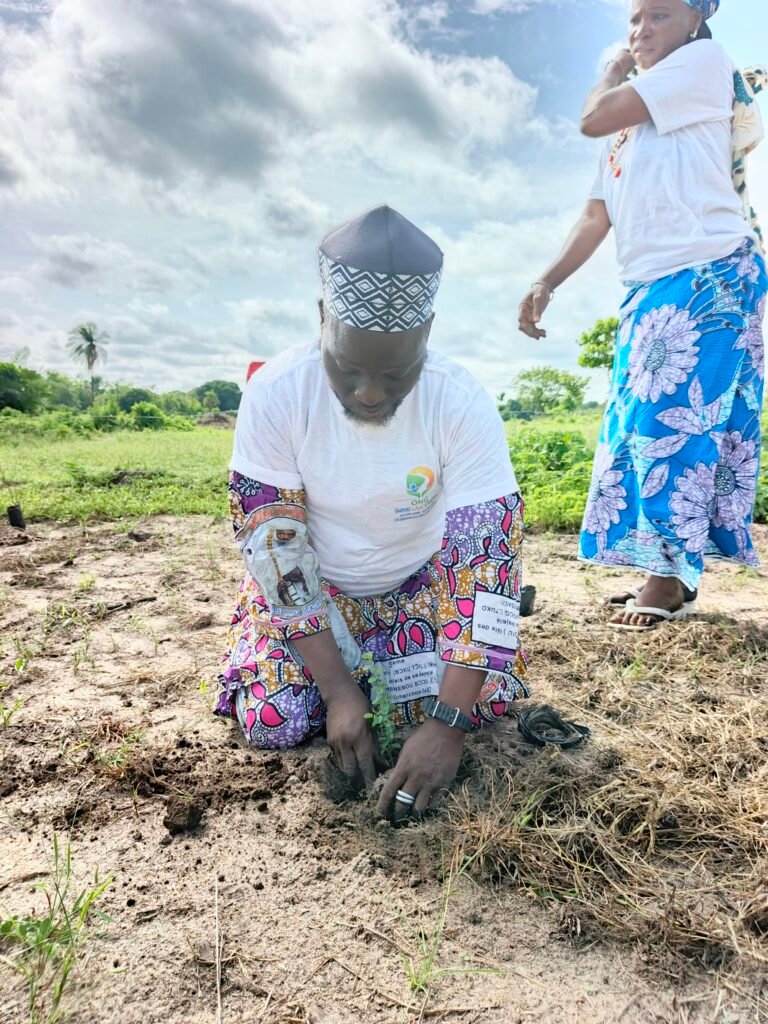
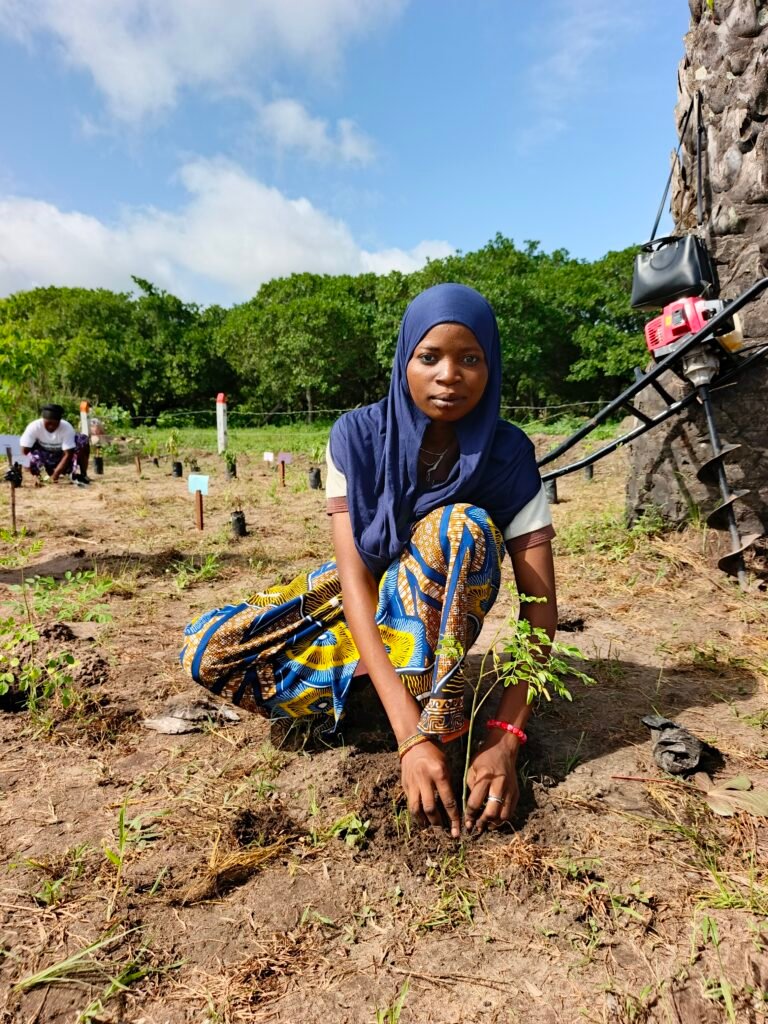
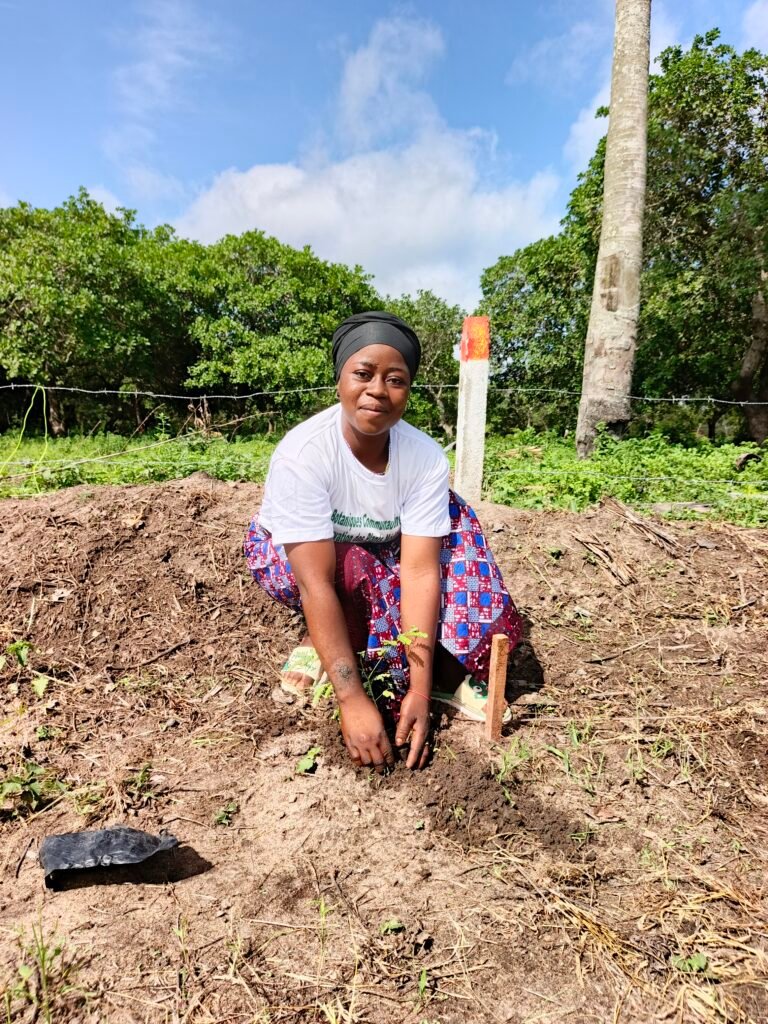
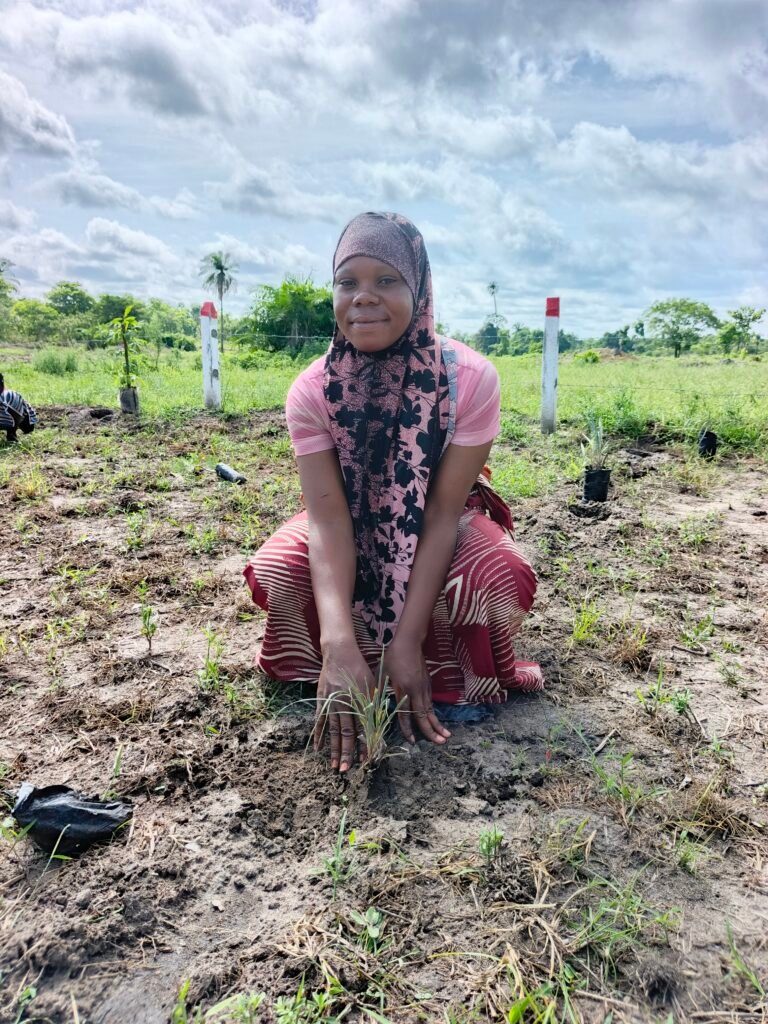
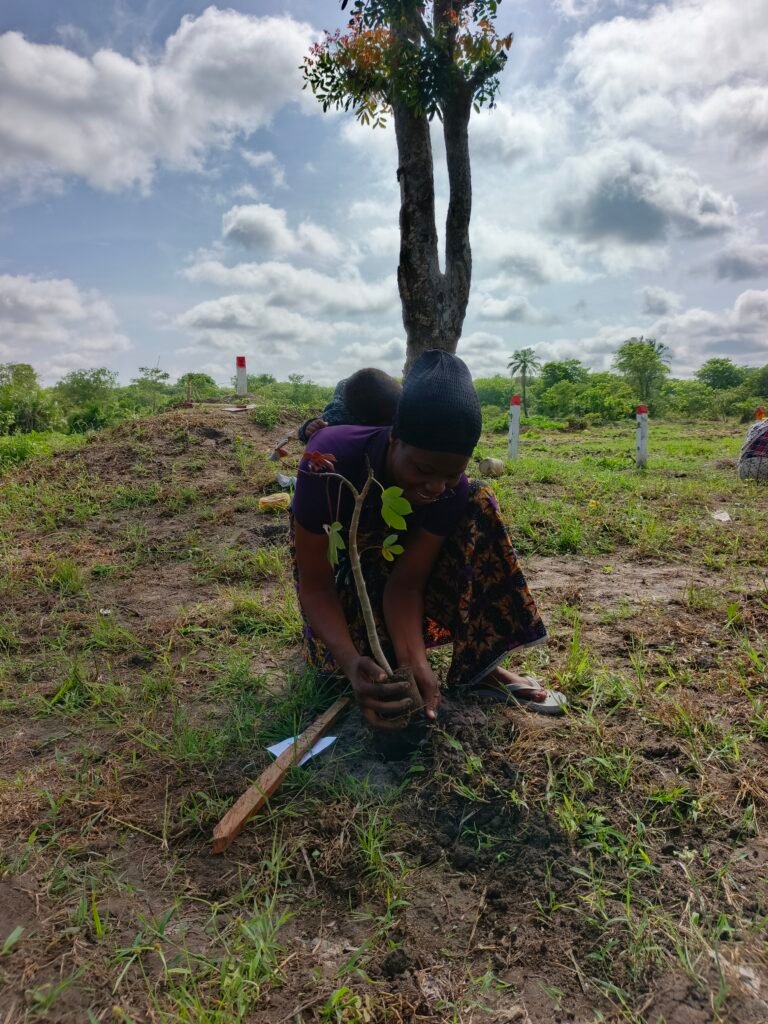
In total, hundreds of plants from 30 medicinal species, divided into four main categories, were put into the ground.
For large trees, six species were planted: Khaya senegalensis (African mahogany), baobab (Adansonia digitata), kapok (Ceiba pentandra), afzelia (Afzelia africana), tamarind (Tamarindus indica), and iroko (Milicia excelsa).
For fruit and useful trees, the species included soursop (Annona muricata), guava (Psidium guajava), papaya (Carica papaya), lemon (Citrus limon), sugar apple (Annona squamosa), and Garcinia kola (Garcinia kola).
Shrubs and semi-trees included moringa (Moringa oleifera), cassia (Cassia sp.), laurel (Laurus nobilis), noni (Morinda citrifolia), pride of Barbados (Caesalpinia pulcherrima), red and white jatropha (Jatropha integerrima and Jatropha curcas), gmelina (Gmelina arborea), eucalyptus (Eucalyptus globulus), and crab’s eye (Abrus precatorius).
Finally, the medicinal plants included hyssop (Hyssopus officinalis), lemongrass (Cymbopogon citratus), mint (Mentha sp.), bitter leaf (Vernonia amygdalina), wormwood (Artemisia annua), African basil (Ocimum gratissimum), verbena (Verbena officinalis), snake plant (Dracaena trifasciata), roselle (Hibiscus sabdariffa), epazote (Dysphania ambrosioides), heliotrope (Heliotropium indicum), and hog plum (Spondias mombin).
This plant assemblage mixes local species, fruit trees, useful shrubs, and medicinal plants – a diversified approach that meets the project’s objectives.
Management Committees to Watch Over the Legacy
To ensure better garden management, a solution was found: mixed, multidisciplinary management committees to enforce usage rules, maintenance, and oversight.
Before the crowds dispersed, a structural decision was formalized: the establishment of management committees in both localities.
In N’Dali, the committee consists of five members – three men and two women:
- Bio Guiré Toko N’Gobi – farmer
- Saka Yérima – traditional healer
- Tissirigui Orou Sabi Kpéra – Deputy President of the Hunters’ Association
- Tissirigui Bio Gabo – traditional healer
- Alassane Idrissou – traditional practitioner
In Tchatchou, the committee has six members – three men and three women, in a spirit of perfect parity:
- Sabi Sado – traditional healer
- Mama Taba – traditional healer
- N’Sreme Habiba – traditional healer
- Bagoudou Imorou – traditional healer
- Boukari Habibou Gounou Moukaïla – merchant
- Chabi Assouma – farmer
These committees reflect the communities themselves: diverse, vibrant, and now responsible for their medicinal gardens.
A final announcement, and not the least: the Executive Director promised that an upcoming mission would deliver materials and equipment to sustainably maintain the sites. In Tchatchou, he issued a call for responsibility: « Use these resources responsibly. Ensure the long-term protection of the species planted. » And he expressed a hope: « During our upcoming monitoring missions, I hope to see a well-maintained and effectively protected garden. »
The days of June 3 and 4, 2026, will remain a turning point for N’Dali and Tchatchou. These community gardens are not simple plots of land: they are living libraries, village pharmacies, and bulwarks against forgetfulness.
It is worth noting that in the project’s intervention zones, the land parcels were neither rented nor purchased. In Tchatchou, the land was donated by the village king – a mark of trust and royal support for the preservation of ancestral knowledge. In N’Dali, the land parcel was facilitated by the Mayor of the municipality through the N’Dali Traditional Healers’ Association.
Everywhere, the traditional healers have sworn to maintain the gardens, the Water, Forests, and Hunting officers have provided training, and the mixed committees now keep watch. The JARCOMED project has taken root. Now, it must flourish.
See the French version of this article on the next page.
Laisser un commentaire